I still remember the exact moment I decided blogging could be more than a hobby. I was sitting at my desk, staring at a bank notification on my phone a $47 deposit from an ad network for a food blog I had almost forgotten I was running. It was not life-changing money. In fact, it barely covered a dinner out. But something clicked in me that afternoon. Someone had visited my website, read something I had written weeks ago while sitting in my pajamas, and that had put actual money in my account without me lifting a finger that day.
That was the beginning of a years-long obsession with blogging business ideas not just the kind you find in generic listicles, but the kind you actually build, test, fail at, and eventually make work. Everything I am going to share with you in this article comes from personal experience. I have tried most of these models myself, made expensive mistakes with a few of them, and found a handful that genuinely changed my financial situation. If you are looking for blogging business ideas to turn your writing into a real income stream, you are in the right place.
Why Blogging Is Still One of the Most Viable Business Models in 2025
When I tell people I run a blogging business, I sometimes get the politely skeptical look the one that says, “Isn’t blogging dead?” I understand why. The internet has changed dramatically. AI-generated content is everywhere. Social media has eaten into organic traffic. And yes, the early days of slapping up 500-word articles and watching the money roll in are long gone.
But here is what I have learned from years in this space: blogging is not dead. What is dead is lazy blogging. The bloggers who are struggling right now are the ones who never treated their blog as a business in the first place.
What I Got Wrong About Blogging When I Started
When I launched my first blog, I thought the model was simple. Write content, get traffic, earn money. I had no niche strategy, no monetization plan, and no understanding of what my readers actually needed. I was writing for myself and hoping the world would care. It took me about eight months of that approach before I accepted that passion alone does not build a business.
The shift came when I stopped thinking of my blog as a creative outlet and started thinking of it as a product. My content became the marketing. My readers became an audience I was serving. And the money became a natural byproduct of genuinely helping people.
The Difference Between a Blog and a Blogging Business
This distinction matters more than most beginners realize. A blog is a publishing platform. A blogging business is a system where your content consistently attracts the right people, earns their trust, and converts that trust into income whether through ads, products, services, or all three. The blogging business ideas that actually generate sustainable income are fundamentally different from passion projects, because they are built around what the market needs, not just what the writer wants to say.
The 8 Blogging Business Ideas I Have Personally Tried (Ranked by Income Potential)
Let me be completely upfront here. I did not stumble into success with all of these. Some of them I built patiently over months. Others I abandoned after realizing they were not the right fit for my skills or my audience. The table below reflects my honest assessment after actually running each of these models.
| Blogging Business Model | Startup Cost | Time to First Income | Income Ceiling | My Personal Rating |
| Niche Blog with Display Ads | Low ($50–100) | 6–12 months | Medium | ★★★☆☆ |
| Affiliate Marketing Blog | Low ($50–100) | 3–6 months | High | ★★★★★ |
| Digital Products Blog | Low–Medium | 2–4 months | Very High | ★★★★★ |
| Freelance Writing Blog | Minimal | 1–2 months | Medium–High | ★★★★☆ |
| Coaching / Consulting Blog | Minimal | 1–3 months | Very High | ★★★★☆ |
| Newsletter-Driven Blog | Low | 3–6 months | High | ★★★★☆ |
| Dropshipping Content Site | Medium ($200+) | 3–6 months | Medium | ★★☆☆☆ |
| Course Creator Blog | Medium ($100–300) | 4–8 months | Very High | ★★★★★ |
Niche Blogging With Display Ads My First $100 Online and What It Took
The first real money I made online came from display advertising on a niche food blog. I had stumbled into a specific corner of the recipe world budget meals for college students that had decent search volume and very little high-quality competition at the time. I wrote consistently for about seven months before I was accepted into a mid-tier ad network that paid significantly better than Google AdSense.
The honest truth about this model is that it works, but it requires patience and volume. I needed close to 80 published posts and around 25,000 monthly pageviews before the income felt meaningful. For someone who wants results quickly, this is not the path. But for someone willing to play the long game, a well-run niche blog with display ads can become genuinely passive income over time.
Affiliate Marketing Blog The Income Model I Scaled the Fastest
Out of everything I have tried, affiliate marketing is the model that gave me the clearest path from zero to real income. The basic idea is straightforward: I create content that helps people make purchasing decisions, and when they buy through my links, I earn a commission.
What I did not expect was how much the niche matters here. My first affiliate site was in the home office equipment space, and I chose it specifically because of its commission rates and the fact that people searching for those products were already in a buying mindset. Within four months, I had my first $300 affiliate commission month. Within a year, that blog was reliably generating between $1,500 and $2,500 a month with no inventory, no customer service, and no deliverables other than well-written content.
The key insight I keep coming back to is this: affiliate blogging is not about volume of posts. It is about writing deeply helpful, honest reviews and comparisons for products people are already actively searching for.
Selling Digital Products Through a Blog What Worked and What Flopped
This is the model I am most excited about right now, and also the one where I made my most expensive mistake early on. When I first tried selling digital products through my blog, I built a comprehensive $97 e-book without ever testing whether my audience wanted it. I spent six weeks writing it and made exactly three sales in the first month.
The lesson was hard but clear: validate before you build. When I came back to this model a year later, I spent two weeks asking my email subscribers what they were struggling with most. Then I built a $27 template pack based directly on their answers. It sold 40 copies in the first week through a simple email sequence and a single blog post.
Digital products templates, e-books, Notion dashboards, printables, swipe files have almost zero marginal cost. Once I build them, every additional sale is nearly pure profit. That math becomes very compelling once you have even a modest audience.
Using a Blog to Get Freelance Writing Clients How I Landed My First $500 Project
One thing most people overlook is that a blog is one of the most powerful portfolios a freelance writer can have. When I decided to take on freelance clients alongside my own blogging, my existing blog posts did all the selling for me. A marketing manager at a mid-sized software company found one of my articles about email marketing through Google, liked how I wrote, and reached out directly.
That first project paid me $500 for four blog posts. It took me about five hours of total work. The math on that was very different from anything my ad income had produced at that point.
If you are thinking about blogging business ideas for beginners, this is genuinely one of the fastest paths to income I know of, because you are not waiting for traffic to build. You are using your blog as proof of your writing ability and letting clients come to you.
Coaching and Consulting Through a Blog The Highest-Earning Model I Have Used
This one surprised me the most. I started a blog in the personal productivity space partly as a creative project and partly to document my own systems for getting things done. After about eight months of consistent posting, I started getting emails from readers asking if I offered one-on-one coaching. I had never considered it.
I put together a simple offer a 60-minute strategy call for $150 and mentioned it in one of my newsletters. I booked six calls in the first week. Since then, I have moved toward group coaching programs and retainer consulting, and this has become by far my highest-earning blogging-related income stream. The key was that my blog had already done the trust-building work before anyone ever paid me a cent.
The Newsletter-Driven Blog Building an Audience That Pays You Directly
More recently, I have been experimenting with treating my email newsletter as the core product and the blog as the top-of-funnel. Platforms like Substack and Beehiiv have made it genuinely viable to charge subscribers directly for premium content, and the economics are attractive because you own your audience completely no algorithm changes, no ad revenue swings.
My newsletter currently has a modest paid subscriber base, but the revenue-per-reader is significantly higher than anything I earn from display ads. If I were starting fresh today with everything I know now, building a newsletter-first blog is very likely what I would do.
How to Choose the Right Blogging Business Idea for Your Situation
One of the biggest mistakes I see beginners make is picking the most exciting-sounding business model without thinking about whether it actually fits their skills, time, and income goals. I made this mistake myself more than once.
Questions I Asked Myself Before Committing to a Niche
Before I launched any successful blogging business, I had to get honest with myself about a few things. What do I know well enough to write about consistently for years without running out of ideas? Who is already searching for that kind of information? Is there a clear way to monetize an audience in this space? These are not glamorous questions, but answering them honestly saved me from building in wrong directions more than once.
Matching the Business Model to Your Skills, Time, and Income Goal
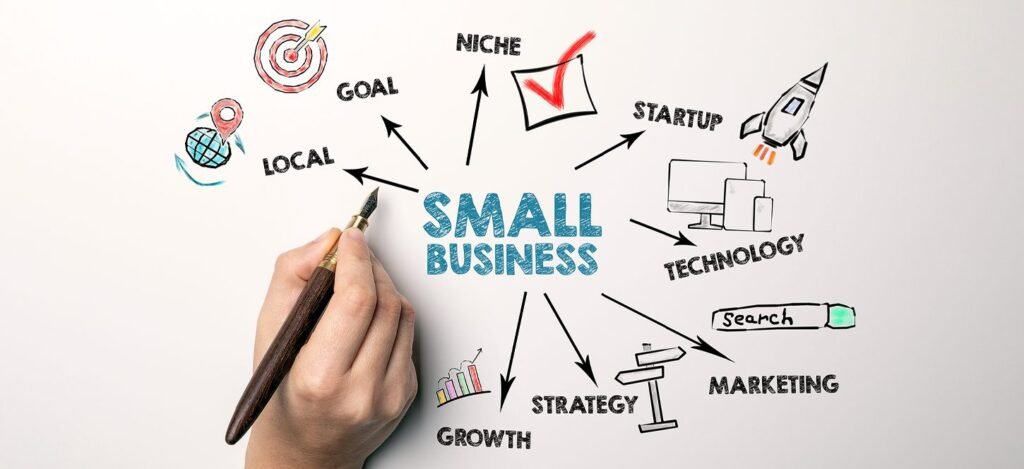
If you need income within 60 days, display ad blogging is not your answer. If you hate sales conversations, coaching is probably not the right fit either at least not at first. The best Small business ideas are the ones that play to your existing strengths while targeting a market with real demand. A person with strong writing skills and a professional background in a specific industry is almost always better served by a freelance writing blog or a consulting-led blog than by trying to build a dropshipping content site from scratch.
How to Start a Blogging Business: The Exact Steps I Followed
When people ask me how to start a blogging business, I try to give them the version of the answer I wish someone had given me not the polished overview, but the actual sequence that worked. Here is what I did, in order.
Step 1 Picking a Profitable Niche (My Personal Process, Not a Generic Checklist)
I start by making a list of every topic I could write about without running dry for at least two years. Then I cross-reference that list with keyword research to see which topics have real search demand. Then I look at what the top-ranking sites in each niche are doing and ask myself honestly: can I do this better, more specifically, or for a more underserved audience?
The niche I settled on for my most successful blog was not my most passionate choice it was the intersection of something I knew well and a corner of the market that was being served generically by sites that clearly did not have real experience with the topic.
Step 2 Setting Up the Blog: What I Spent, What I Would Cut, What I Would Never Skip
My setup cost was under $100 for the first year. I used a well-regarded shared hosting provider, a free theme I later upgraded, and that was essentially it. The one thing I would never skip is a professional-looking design, even on a budget. First impressions on the web happen in seconds, and an ugly blog loses readers before they have a chance to read a word.
What I would cut: premium plugins I did not need in month one, expensive keyword tools before I had enough content to justify them, and any paid social media promotion before I had established what content my audience actually responded to.
Step 3 Creating a Content Plan That Attracts Buyers, Not Just Readers
Early on, I made the mistake of writing whatever felt interesting to me. The content that actually built my business came from a different place: I mapped out the questions my ideal reader was typing into Google at each stage of their journey from “what is X” all the way through to “best X for Y budget.” That full-funnel content approach meant that my blog was attracting both people early in their research and people ready to buy.
Step 4 Choosing and Setting Up Your First Monetization Method
My advice here is to pick one monetization method and set it up properly before trying to add more. I spent too long in my first year dabbling in display ads, affiliate links, and a half-finished e-book simultaneously and doing none of them well. Focus compounds. Once I committed fully to affiliate marketing on my second blog, everything accelerated.
The Blogging Business Ideas That Failed for Me (And Why I Do Not Regret Trying Them)
I want to spend some time on this because I think the honest failures teach more than the curated wins. Not every blogging business idea I pursued worked out, and the ones that did not work taught me things I use every day.
The Dropshipping Blog Experiment What Went Wrong
About two years into my blogging journey, I got excited about the idea of combining content marketing with a dropshipping store. The theory was sound: write helpful product review content, capture search traffic, and sell directly through a connected store rather than sending traffic to Amazon. In practice, the customer service demands of running a store even a small one completely distracted me from content creation, which was where my real skill was. The site never reached profitability, and I shut it down after eight months having learned a valuable lesson about staying in my lane.
Trying to Build a Viral Blog in a Saturated Niche Expensive Lesson Learned
Early on, I also tried to build a personal finance blog in a space that was absolutely dominated by massive, well-funded media sites. I thought my personal voice would differentiate me. Maybe it would have eventually, but the traffic never came fast enough to sustain my motivation, and I did not have the patience or the budget to outlast the established players. This experience is what led me to obsess over niche selection because working in a smaller, less competitive corner of a big topic is almost always smarter than trying to go head-to-head with authority sites from day one.
These experiences are why when I talk about blogging business ideas, I always frame them honestly. Not every idea works for every person in every situation, and recognizing the right fit early saves enormous amounts of time.
How Much Money Can You Actually Make From a Blogging Business?
I hate vague answers to this question, so I am going to give you real numbers from my own experience.
My Income Progression From Month 1 to Month 18
Month 1 through 3: $0. I had no traffic and no monetization in place, and that is completely normal. Month 4: my first $47 from display ads. Month 6: $180 combined from ads and a few affiliate clicks. Month 9: $450, when my affiliate content started to rank properly. Month 12: $1,200, after I had refined my content strategy and was writing more deliberately for buyer-intent keywords. Month 18: I hit my first $3,000 month, which was the point where blogging stopped being a side project and started being a serious part of my income picture.
These are not the exceptional success story numbers you see on income reports designed to sell courses. They are what consistent, intentional effort in a reasonably well-chosen niche looks like.
Realistic Timelines for Each Blogging Business Model
Display ad income requires the most patience typically 6 to 12 months before meaningful revenue appears. Affiliate marketing can move faster, especially if you focus on buyer-intent content early. Freelance writing income is the fastest of all, because it depends on your ability to close clients rather than waiting for traffic to build. Digital product income sits somewhere in the middle you can validate and launch quickly, but scaling requires an audience. Coaching income is fast if you are willing to reach out proactively and if your blog credibly demonstrates your expertise.
Mistakes I Made as a Beginner That Cost Me Months of Progress
If you are exploring blogging business ideas for beginners, I genuinely want to save you the detours I took. These are not abstract warnings they are specific things I did wrong that I can trace directly to months of wasted effort.
Picking a Niche I Was Passionate About but Nobody Searched For
My second blog was a travel journal about my home region. I loved writing it. My family loved reading it. Google was completely indifferent to it because almost nobody was searching for the content I was creating. Passion is a necessary ingredient, but it is not sufficient. You need passion plus market demand, or you are writing a personal diary that happens to be publicly accessible.
Writing Blog Posts With No Keyword Strategy for the First Six Months
For a long time, I did not do any keyword research before writing posts. I just wrote about whatever felt timely or interesting. Looking back, maybe 10 percent of those posts ever ranked for anything meaningful. The remaining 90 percent got almost no organic traffic ever. That is an enormous amount of work for very little return, and it was entirely avoidable.
Trying to Monetize Too Early Before Building Traffic
I put affiliate links in my first blog post. On a site with 12 visitors a week. The math simply does not work until you have an audience, and focusing on monetization before traffic pulls your attention away from the one thing that actually matters in the early stage: creating genuinely useful content and building the authority that makes Google want to rank you.
Tools I Actually Use to Run My Blogging Business (No Affiliate Padding)
I want to be straightforward here: I am not going to list 30 tools because a longer list looks more authoritative. These are the things I actually use, and why.
For hosting, I have settled on a provider that prioritizes speed and uptime above all else, because slow sites lose readers and rankings simultaneously. For keyword research, I use a paid tool that shows me search volume, difficulty, and related questions together that combination saves me hours of guesswork when planning new content. For email marketing, I use a platform that makes automation genuinely simple, because my email list is the most valuable asset my blogging business has, and treating it as an afterthought would be a significant mistake. For writing, I use a distraction-free editor that shows me my word count and reading time as I go nothing elaborate. For analytics, I rely on a combination of Google Search Console (which tells me exactly what people are searching before they find me) and a lightweight analytics tool that respects reader privacy.
The honest version of my tool stack costs me around $80 per month at full operation. In the early days, I ran everything on free tiers and it worked fine.
My Honest Advice if You Are Starting a Blogging Business in 2025
After everything I have tried and learned, if I were starting completely from scratch today, here is what I would do differently.
The One Business Model I Would Pick if I Were Starting From Zero Today
I would build a newsletter-first blog in a tight niche where I had genuine expertise. I would create free blog content designed specifically to rank for high-intent searches, use that content to grow an email list, and launch a paid newsletter tier after 6 to 9 months once I had an audience that trusted me. This approach gives me owned distribution from day one no algorithm can take my list away from me and it creates a direct revenue relationship with my most engaged readers.
The reason I would not start with display ads is that the traffic requirements are too high for a new blogger to hit quickly. The reason I would not start with coaching exclusively is that I would need the blog to build credibility first anyway. The newsletter-first model does both simultaneously.
What Consistency Actually Looks Like (Not the Motivational Version)
Every piece of advice about blogging tells you to be consistent. What nobody tells you is what consistency actually looks like when you have a full-time job, a family, and periods of life where motivation is genuinely hard to find. For me, consistency has never meant publishing five times a week. It has meant protecting one dedicated writing session per week no matter what, and treating that session as non-negotiable as a meeting with my most important client.
Some of my best-performing posts were written in 90-minute sessions on Sunday mornings before the rest of the house was awake. Consistency is not about volume. It is about not stopping.
Conclusion
The most honest thing I can tell you after years of testing every blogging business model I could find is this: there is no single right answer. The blogging business ideas that worked best for me might not be the ones that work best for you, because the right model depends on your skills, your schedule, your risk tolerance, and the audience you are genuinely positioned to serve.
What I am certain of is that the window is not closed. Blogging as a business is harder than it was in 2015, but it is also more respected, more diverse in its income models, and more accessible to people with real expertise who want to build something lasting. The people winning right now are not the ones publishing the most content. They are the ones publishing the most useful content, for the most specific audience, with a clear plan for how that audience becomes a business.
Start with one idea. Commit to it seriously for at least a year. Learn from what the data tells you. Adjust. That is the whole strategy, and it is more than enough to build something real.
Also Read About :- Zero Investment Business